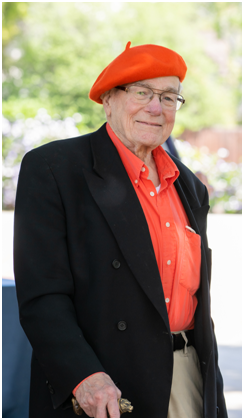
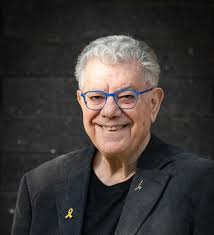
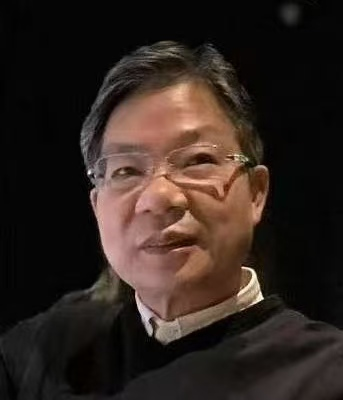
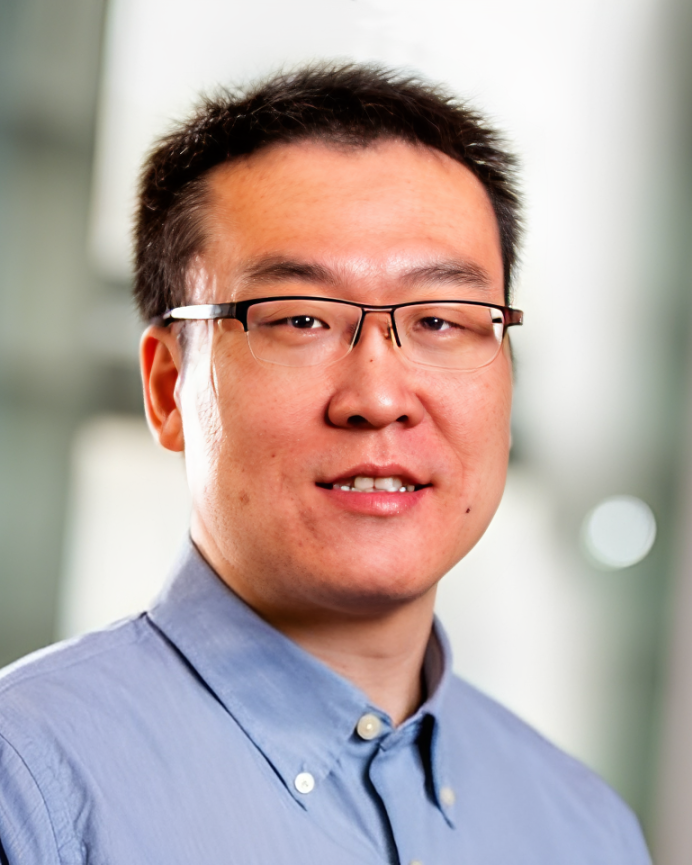
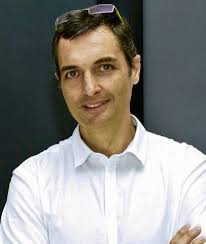
Sason Shaik Born on September 1st 1948 in Bagdad, Iraq.
Director of the Lise Meitner-Minerva Center for Computational Quantum Chemistry. Head of a group of theoretical chemistry in the Institute of Chemistry of the Hebrew University, Israel B.Sc. M.Sc. Bar Ilan University (1974); Ph.D. The University of Washington (1978); Postdoc Cornell University (1979); Fulbright Fellow (1974-1979); The Israel Chemical Society (ICS) Award for the Outstanding Young Chemist (1988); The Kahlbaum Lectureship (The University of Basel, 1988); Alexander von Humboldt Senior Research Award (1995-1999, 2014-5); The A. D. Bergmann Prize (1995); The Troisieme Cycle Lecturer of the French Speaking Swiss (Friebourg, Berne, Neuchatel, Geneve,1995; Basel, 1997); The ICS Excellence Award (2000); The Kolthoff Prize (2001); Elected to the Scientific Board of WATOC (2002); Fellow of the AAAS (2003); The Kurt -Alder Lectureship (University of Köln, 2004); The Minnesota Graduate-Students Lectureship (The University of Minnesota, 2004); The Charles Coulson Lectureship (University of Georgia, Athens, 2005); The Christmas Lectureship (University of Heidelberg, 2006); The IQBC Lectureship (Prague, 2007); Leonard N. Owen Lectureship (Imperial College, 2010); The International Lectureship Series for Computational Science (Cape Town University, 2010); The Frontiers in Bioinorganic Chemistry Lectureship (Max Planck Institute in Mülheim, 2012); The Scrocco Lectureship (Scuola Normale Superiore di Pisa , 2013); The Lu Jiaxi Lectureship (The State Key laboratory, Xiamen, China, 2013); Selected to be included in "175 faces in chemistry" (The Royal Society of Chemistry, 2013); The Schrödinger Medal (2007); WATOC Fellow (2007); The August-Wilhelm-von-Hofmann-Dekmünze (Medal) (German Chemical Society, 2012).Explored and established rules for the effects of oriented external electric fields on chemical reactivity of enzymatic and organic reactions.
Development of models for halogen bonds, CH---HC interactions, and other weak interactions.
Questioning "common wisdom": the nature of the π-electronic systems of benzene and other conjugated systems; the limitations and significances of the Bronsted coefficients, slopes of Hammett plots, Reactivity-Selectivity Principle, Bell-Evans-Polanyi Principle, etc.; the glass ceiling of multiple bonding in main elements.